Every year, preventable accidents occur during equipment servicing—workers injured by unexpected startup, maintenance delayed by unclear protocols, or companies fined for non-compliance. At the heart of these failures? A missing or poorly written lockout tagout (LOTO) procedure.
Writing an effective LOTO procedure isn’t about filling out a template. It’s about creating a living document that accounts for real-world conditions, specific machinery, and human behavior. Done right, it stops energy hazards before they strike. Done wrong, it gives a false sense of security.
This guide walks through how to write a lockout tagout procedure that actually works—step by step, with practical examples, common pitfalls, and actionable structure.
Understand What a Lockout Tagout Procedure Is (And What It Isn’t)
A lockout tagout procedure is a documented, machine-specific plan for isolating all hazardous energy sources before maintenance or servicing. It’s not a general policy or a one-size-fits-all checklist.
It IS: - Tailored to a specific machine or system - Sequential and enforceable - Aligned with OSHA 29 CFR 1910.147 - Designed for use by authorized employees
It IS NOT: - A generic safety poster - A verbal agreement - A blanket rule applied across different equipment - Optional when time is short
For example, locking out a conveyor system with multiple drive motors, gravity-fed rollers, and pneumatic controls requires a different process than isolating a single-phase bench grinder—even if both use electrical energy.
Without specificity, your procedure fails its primary purpose: preventing accidental energization.
Step 1: Identify Machines and Equipment Requiring LOTO
Not every piece of equipment needs a full LOTO procedure—but most do if service involves removing guards, adjusting parts, or accessing internal components.
Create an inventory of all machines that require lockout during servicing. Focus on equipment with:
- Stored energy (springs, capacitors, elevated parts)
- Multiple energy sources (electric, hydraulic, pneumatic, thermal, chemical)
- History of maintenance incidents
- Complex shutdown sequences
Example: A hydraulic press may store energy in accumulators even after power is off. A packaging machine might have tensioned belts that snap if released prematurely.
Use a simple spreadsheet to log:
| Equipment ID | Primary Energy Source | Secondary Sources | Maintenance Frequency | LOTO Required (Y/N) |
|---|---|---|---|---|
| HP-101 | Electrical | Hydraulic, Gravity | Weekly | Yes |
| FG-205 | Pneumatic | Mechanical | Monthly | Yes |
| BT-003 | Electric (low voltage) | None | Quarterly | No |
This list becomes your foundation. Each "Yes" requires a dedicated LOTO procedure.
Step 2: Map All Energy Sources and Isolation Points Before writing the steps, you must know exactly what needs to be locked and tagged.
Walk through each machine with maintenance leads and operators. For every unit, identify:
- Power disconnects (electrical breakers, switches)
- Valve closures (hydraulic, air, steam lines)
- Mechanical blocks (pins, braces, guards)
- Bleed points for residual pressure
- Capacitor discharge mechanisms
Common mistake: Assuming one lockout point is enough. A CNC lathe might draw power from a main disconnect, but coolant pumps and tool changers could have separate circuits.
Label each isolation point clearly. Use tags like “LOTO Point – Electrical Disconnect – HP-101” so there’s no confusion during execution.
Include photos or diagrams in the final procedure. A visual reference reduces errors, especially for shift workers or temporary staff.

Step 3: Write the Procedure Using a Standardized Format
Clarity saves lives. Use a consistent structure across all procedures. Here’s a proven format:
Title Block
- Machine name and ID
- Date created/revised
- Authorized by
Purpose One sentence explaining why this LOTO exists. Example: "This procedure ensures safe servicing of HP-101 hydraulic press by isolating all energy sources and preventing unexpected startup."
Scope Define what tasks the procedure covers (e.g., die changes, pump replacement) and who can perform it (authorized employees only).
Required Tools & Devices List locks, tags, hasps, voltage testers, personal protective equipment (PPE), and bleed tools.
Step-by-Step Instructions
Use active voice and imperative mood:
- Notify all affected employees that maintenance is beginning.
- Shut down HP-101 using the emergency stop button.
- Open main electrical disconnect (located at Panel E-7). Verify off position.
- Close hydraulic isolation valve (Valve HV-3) and bleed pressure via relief port.
- Install lockout device on disconnect and hydraulic valve. Apply personal lock and tag.
- Attempt to restart the machine using the start button to verify zero energy.
- Proceed with maintenance only after verification.
Critical tip: The “try to restart” step is non-negotiable. If the machine can still operate, the lockout failed.
Include warnings where needed: > ⚠️ Warning: Accumulator may retain pressure for up to 15 minutes after shutdown. Always bleed via HV-3 before locking.
Step 4: Validate and Test the Procedure
A paper procedure means nothing until it’s tested.
Conduct a dry run with an authorized employee following the steps exactly as written. Observe for:
- Missing isolation points
- Unclear language
- Tools not available
- Conflicts with operational workflow
Revise based on feedback. Then perform a live trial during scheduled maintenance with a safety officer present.
Document the validation date and sign-off. Update the procedure annually or after major equipment changes.
Step 5: Train Employees and Enforce Compliance
Even the best LOTO procedure fails without proper training.
Training should include:
- Difference between authorized and affected employees
- How to read and follow each machine-specific procedure
- Hands-on practice applying locks and tags
- Group lockout coordination (if applicable)
- Retraining every 12 months or after incidents
Use real scenarios in training: > Scenario: Two technicians are replacing a motor on FG-205. One applies a lock, but the supervisor insists on speeding things up. What should they do?
Answer: No work proceeds until all locks are applied. Authority to override LOTO does not exist under OSHA rules.
Enforcement must be unwavering. Exceptions create culture decay.
Common Mistakes That Undermine LOTO Procedures Avoid these pitfalls:
1. Copy-pasting templates Using a boilerplate LOTO for every machine ignores unique energy sources. A forklift battery change isn’t the same as locking out a boiler.
2. Skipping verification Failing to test for zero energy is the most dangerous shortcut. Always attempt to restart.
3. Allowing tag-only use without locks Tags are warnings. Locks are physical barriers. Use both—tags alone don’t comply with OSHA unless lockout is impossible (and justified).
4. Poor labeling Unmarked isolation points lead to confusion. Use standardized labels visible in low light.
5. Not updating after modifications A machine upgrade may add a new energy source. The LOTO procedure must reflect that.
Tools and Devices Used in Effective LOTO Procedures

While the procedure is the document, the physical tools make it work. Common components include:
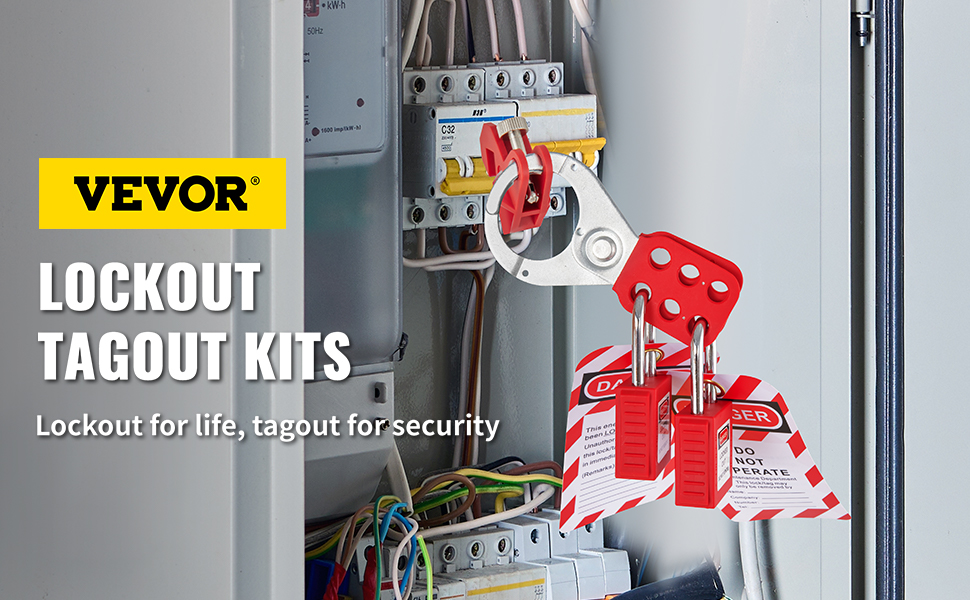
- Lockout hasps – Allow multiple locks on one isolation point
- Group lockout boxes – Centralize control during team maintenance
- Valve lockouts – Fit over closed handles to prevent reopening
- Circuit breaker locks – Secure electrical panels in off position
- Tagout tags – Include name, date, reason, and contact info
Invest in durable, standardized equipment. Color-coding (e.g., red for electrical, blue for pneumatic) reduces errors.
Example: LOTO Procedure for a Conveyor System
Machine: Main Production Conveyor (CV-300) Energy Sources: Electrical (3-phase), Mechanical (tensioned belts), Gravity (elevated sections)
Steps:
- Alert line operators that CV-300 will be taken offline.
- Press emergency stop at Station 5. Confirm belt has stopped.
- Open main disconnect at Panel D-12. Confirm off.
- Lock disconnect using personal lock and hasp.
- Install mechanical belt lock at Drive Pulley 2.
- Close air purge valve (AV-4) and lock in closed position.
- Test by pressing start button—no movement should occur.
- Begin maintenance.
Note: If working under conveyor, use support stands to prevent collapse from gravity.
This level of detail prevents assumptions. It also holds up under audit.
Finalize, Distribute, and Maintain
Once validated:
- Print and post near each machine
- Store digital copies in shared drives with version control
- Include in onboarding and refresher training
- Review annually or after near-misses
Update immediately after: - Equipment modifications - Procedure failure (e.g., injury, near-hit) - Changes in personnel or roles
A LOTO procedure is not a one-time project. It’s part of an ongoing safety system.
Writing a lockout tagout procedure that works starts with respect—for the machinery, the energy it holds, and the people who service it. Follow these steps, avoid the common traps, and build procedures that don’t just check a compliance box but prevent real harm. Start with one machine. Get it right. Then scale.
Your team’s safety depends on the details you document today.
FAQ
What’s the difference between lockout and tagout? Lockout uses physical devices (locks) to prevent energy release. Tagout uses warning tags. OSHA requires lockout whenever possible—tagout alone is only allowed if lockout is infeasible.
Who writes the LOTO procedure? A qualified safety officer or maintenance supervisor, in collaboration with equipment operators and engineers familiar with the machinery.
How specific should the steps be? Each step must be machine-specific, actionable, and unambiguous. Include exact locations of disconnects, valves, and test points.
Can one procedure cover multiple similar machines? Only if they are identical in design, energy sources, and isolation points. Slight variations require separate procedures.
What happens if a lock is lost or a worker forgets to remove it? Each site must have a documented process for lock removal (e.g., shift supervisor verifies area is clear and removes lock with documentation). Never force removal without verification.
Do battery-powered tools need LOTO? Yes, if servicing involves accessing moving parts or replacing batteries under load. Remove batteries, lock storage compartment, or use disconnection methods.
Is LOTO required for routine production tasks? No—for minor tool changes or adjustments during normal operation, if they are part of regular use and don’t require entering danger zones. Otherwise, LOTO applies.
FAQ
What should you look for in How to Write a Lockout Tagout Procedure That Works? Focus on relevance, practical value, and how well the solution matches real user intent.
Is How to Write a Lockout Tagout Procedure That Works suitable for beginners? That depends on the workflow, but a clear step-by-step approach usually makes it easier to start.
How do you compare options around How to Write a Lockout Tagout Procedure That Works? Compare features, trust signals, limitations, pricing, and ease of implementation.
What mistakes should you avoid? Avoid generic choices, weak validation, and decisions based only on marketing claims.
What is the next best step? Shortlist the most relevant options, validate them quickly, and refine from real-world results.